
Program
African Art Dialogues and Strauss & Co announce a special collaboration with the Smithsonian National Museum of African Art at the 2026 edition of the African Art in Venice Forum, hosted during the opening week of the 61st Venice Biennale.
The opening breakfast (by invitation only), on Tuesday 5-6 May 2026, at Hotel Monaco & Grand Canal, Venice, will bring together artists, curators, scholars, collectors, and institutional representatives. This will be followed by the African Art in Venice Forum, a day of talks and moments of encounter and exchange.
“The Forum recognises the lack of African country pavilion representation at the Biennale and therefore creates a space of coming-together for artists, curators and art enthusiasts from Africa and its diasporas dedicated to dialogue and shared inquiry,” says Kate Fellens, Head of International Business Development at Strauss & Co.
The 2026 edition of the Forum is themed around Beyond Visibility: A Method of Inquiry.
“African art is approached not as a closed or segmented field, but as a living and evolving one, shaped by overlapping temporalities, multiple cultural affiliations, and practices that often resist fixed categorisation,” explains Neri Torcello, founder and co-head of African Art in Venice Forum.
The Forum approaches visibility as a scholarly framework, a point of departure rather than an endpoint. At a time when the international art world is increasingly centering narratives from across the globe, this method of inquiry asks what visibility makes possible and how listening to different perspectives enriches our understanding of African art history.
“The National Museum of African Art seeks to serve as an artist-centered platform for discussions about the meanings of ‘Africa’ and ‘art,’” said Kevin D. Dumouchelle, curator at the Smithsonian National Museum of African Art. “As such, we could not be more delighted to support the African Art in Venice Forum, which has built a global reputation as a place in which conversations about African creative achievement occur under the eyes of the global art world.”
Working alongside exhibitions and curatorial research, the African Art in Venice Forum extends the conversations initiated within institutional contexts into a broader discourse.
“In doing so, it affirms Beyond Visibility as a method of inquiry—one that values collaboration, sustained dialogue, and mutual listening as essential tools for engaging African art in the present,” concludes Neri Torcello.
Program
5 May 2026
Hotel Monaco & Grand Canal
Venice, Italy
AAVF 2026 panels will also be hosted online at ....
TUESDAY, May 5th
8:30 am
Opening Breakfast by Strauss & Co (By Invitation Only)
10:00 am
Opening remarks by African Art Dialogues
10:15 am
Africa In Minor Keys – Conditions of Visibility (Book your free ticket)
Grounded in the context of the Biennale’s main exhibition and national pavilions, this panel reflects on the frameworks that shape visibility. It asks not only who is seen, but how narratives are constructed, histories written, and meanings framed, examining how visibility can both open new possibilities and reinforce existing structures.
Presented by African Art Dialogues with the National Museum of African Art Smithsonian
Moderator:
Ntshepe Tsekere Bopape, Artist, Curator, DJ, Writer (South Africa)
In conversation with:
Kemang Wa Lehulere, In Minor Keys artist (South Africa)
Beya Gille Gacha, Artist, Cameroon Pavilion Curator (France/Cameroon)
Myles Igwebuike, Designer, Researcher and Curator (US/Nigeria)
Awa Konaté, Curator, Art Consultant, and Founder of Culture Art Society (CAS), (Denmark / Côte d’Ivoire)
11:45 pm
Beyond Here: Queering African Art History (Book your free ticket)
What’s next? This panel builds from the National Museum of African Art’s launch of its Here Project–the largest museum initiative of its kind to date to research, exhibit, collect, and to integrate artists from Africa making work connected to their experiences as out individuals. An opportunity to meet artists and thinkers both in and beyond the Project, the panel seeks to further the conversation about what it means to study, exhibit, and participate in an art history in which queer African voices are not only acknowledged but centred.
Presented by African Art Dialogues with the National Museum of African Art Smithsonian
Moderator:
Kevin D. Dumouchelle, Here Project director and exhibition co-curator (USA, Smithsonian Institution, National Museum of African Art)
In conversation with:
Ṣọlá Olúlòde, Here Project artist (UK/Nigeria)
Buhlebezwe Siwani, Here Project artist (South Africa)
Khookha McQueer, Here Project artist (Tunisia)
Damien Ajavon, Here Project artist (Norway/France/Senegal/Togo)
Pamina Sebastião, Here Project artist (Angola)
1:15 pm
Foyer Activity - Here Project Book Toast/Presentation (Book your free ticket)
Sharing/previewing the global launch of The Here Project: Pride and Belonging in African Art (Smithsonian Books publisher; Penguin Random House global distributors), the largest survey of out artists from the continent to date.
Presented by African Art Dialogues with the National Museum of African Art Smithsonian
2 pm
North Africa at the Center: Rethinking Cultural Geographies (Book your free ticket)
What does it mean to approach North Africa as a center rather than a margin? This panel examines artistic practices shaped by multiple cultural and geographic affiliations, highlighting locally driven conversations that engage global contexts without collapsing their complexity.
Presented by African Art Dialogues with the National Museum of African Art Smithsonian
Moderator: Neri Torcello
In conversation with:
Adel al-Mandil, Collector, Collection Kinda (Saudi Arabia)
Meryem Sebti, Editor in Chief, Diptyk (Morocco)
Mehdi-Georges Lahlou, visual artist, performance artist and theatre director (France, Morocco)
Ilyes Messaoudi, Artist (Tunisia) and co-founder of La La Lande Galerie in Paris
3:30 pm
Foyer Activity - Pan-African Cultural Legacies: Activating the Archive (Book your free ticket)
Echoing Pan-African Cultural Legacies: Activating the Commons at The Recovery Plan, this interactive activation unfolds as a living counter-archive within the Forum. Drawing on the latest issue of Africa e Mediterraneo (curated by BHMF), it traces Pan- African convenings across time, foregrounding informal networks and alternative knowledge systems, while inviting participants to engage through reading, interpretation, and collective exchange.
Presented by BHMF and Africa e Mediterraneo
4:15 pm
Traditions Today: Performing and Processing Toward a Holistic History (Book your free ticket)
Evoking In Minor Keys’s considerations of “procession,” what does it mean to make and innovate so-called “traditional” art practices, like West African urban masquerades, in a contemporary environment? How do performance artists allow us to empathize and embody experiences of epistemic repair? Considered together, masquerade and performance art practices offer us paths for seeing how “classical” and “contemporary” art are not separate realms but can be considered part of a continuously evolving field.
Presented by African Art Dialogues with the National Museum of African Art Smithsonian
Moderator:
Khanyisile Mbongwa, Curator of Art in the Public Realm at Amos Rex - curatorial theorist, sociologist, and Sangoma (ancestral-indigenous healer), (South Africa)
In conversation with:
Hervé Youmbi, New African Masquerades artist/curator (Cameroon) *
Amanda Maples, Lisa Homann, and Jordan Fenton (New African Masquerades curators) (USA)
David Sanou and Chief Ekpenyong Bassey Nsa (New African Masquerades artists) * (Burkina Faso and Nigeria)
Wura-Natasha Ogunji, artist (US-Nigeria; 1922 Revisited: Live Arts Program Participant)
ruby onyinyechi amanze, artist (Nigeria-US; 1922 Revisited: Live Arts Program Participant)
Bernard Akoi-Jackson, artist, writer (Ghana; 1922 Revisited: Live Arts Program Participant)
*by video statement
5:45 pm
Foyer Activity - Jelili Atiku: Eyes No Dey Forget Wetin Heart See (Enact 1) (Performance) (Book your free ticket)
Atiku’s Eyes No Dey Forget Wetin Heart See launches 1922 Revisited, a live arts program presented by Third Space Art Foundation during the opening week of the Venice Biennale. It features a mystical figure embodying the earth's energy, embarking on a 'Luminous Pilgrimage,’ a deliberate, trance-like journey that weaves through urban landscapes, integrating Orisha rituals with psychogeography and dérive. This immersive experience invites the audience to embody their true selves, confront societal expectations, and tap into the magic within and around them. Through this ritualistic dérive, participants are encouraged to surrender to the city's rhythms, sensing the emotional resonance of spaces, and allowing the environment to shape their inner landscapes. The performance promotes self-discovery, transformation, and profound connection, addressing cultural identity fragmentation, reclamation, and restitution.
Presented by Third Space Arts Foundation within their 1922 Revisited program
Wednesday May 6
1922 Revisited: Live Arts Program
Presented by Third Space Art Foundation
in collaboration with the African Art in Venice Forum and the European Cultural Centre
8:45 am
Waves of Ash: Navigating Liminal Waters and the Unfinished Archive (Screening and Panel Discussion) (Book your free ticket)
Following a brief screening, Tsige Tafesse moderates a conversation with Tsedaye Makonnen and Jermay Michael Gabriel Cappellin on Waves of Ash. Together they consider burning as bothdestruction and transformation, and what it means to reread transmitted history through a critical gaze across layered memory and forced crossings.
Artists
Tsedaye Makonnen
Jermay Michael Gabriel
Moderator
Tsige Tafesse
Location
Hotel Monaco, Sala Corte
10:00 am
The Dash (Performance) (Book your free ticket)
The Dash is a performance of two runners who race in slow motion for exactly one hour. The performance may be staged within an interior or exterior space: the fixed space of a room; an open plaza; tight city corridors; or from a start line to the finish. The spectators play an important role in this staged competition. As vocal timekeepers, they collectively signal the start time, the half-way mark, and crossing of the finish line.
In their embodiment of restraint and reverberation, collectivity and calm, the performers incorporate facial expressions, hand signals and other gestures as critical choreography and necessary glitch. This movement-language references and riffs from the archive and research of the African sculptures of the 1922 Venice Biennale; track and field competitions; and the languages of drawing shared by amanze and Ogunji.
The title of the performance–with its multiple meanings–offers an additional layer of poetic possibility to this endeavor. A dash is a quick run, a punctuation mark, and in Nigeria, a gift, or a bribe. Turning to the grammatical dash, the race could be conceptualized as break or interruption. Inviting separation from the usual rushing of time, the performance might also be read as the belaboured writing of a long run-on sentence.
Viewers witness the runners' procession–also–as anti-procession. It is a refusal of winners, or the need to pick sides with movement happening as a method for embodying presence, enacting form and expressing feeling–together. Arrival at the finish line a strange, shared feat.
Artists
Wura-Natasha Ogunji
ruby onyinyechi amanze
Location
Hotel Monaco, Sala Corte
11:45 am
L’Opéra du Villageois (Performance) (Book your free ticket)
In L’Opéra du villageois, Zora Snake stages a dialogue between living bodies and museum-held works of art, situated at the crossroads of imaginaries. The performance reconsiders the relationship between museums and the objects they house, engaging ongoing debates surrounding restitution, damage, memory, repair, and return. Focusing in particular on masks and statuettes—conceived as “object-subjects” inhabited by ancestral forces—the work challenges their framing as static art objects. Instead, Snake reactivates their patrimonial and spiritual dimensions, proposing their symbolic return to originating communities. The performance unfolds as a choreographic intervention that reconnects artworks with the bodies historically inseparable from them. Works once confined to storage, vitrines, or archival absence are reintegrated into embodied presence. In doing so, the piece imagines future museums as living, transgenerational spaces without borders, positioning these works within ongoing civilizational histories rather than sealed pasts.
Artists
Zora Snake (Performer)
Maddly Mendy Sylva (Flutist)
Nakeu Wilfried (Technical Manager)
Location
Hotel Monaco, Sala Corte
HOW TO REACH US
The African Art in Venice Forum is held at the Hotel Monaco & Grand Canal, Piazza San Marco 1332, 30124 Venezia (entrance from Calle Vallaresso).
Reception: Sala Oppio
AAVF Foyer: Sala Vallaresso - AAVF Auditorium: Sala Corte.
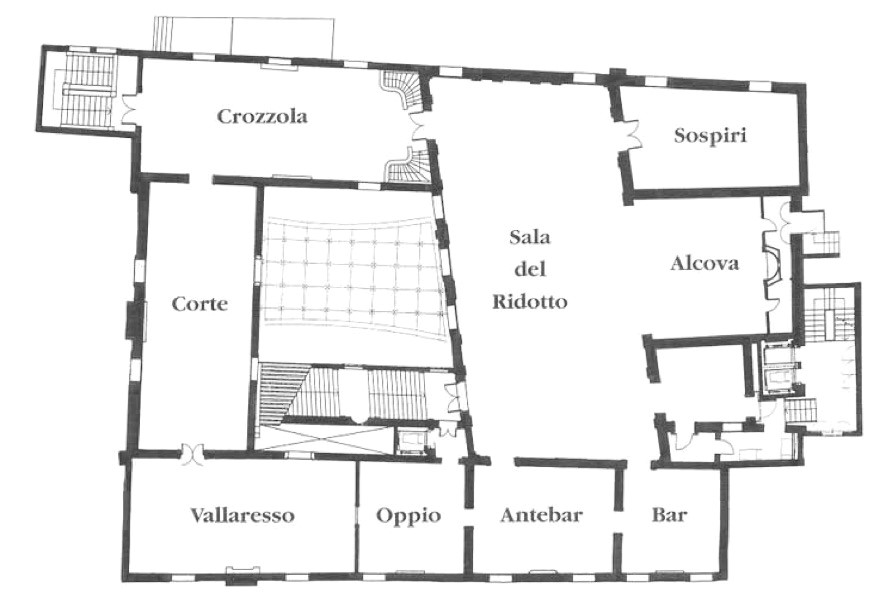
The staircase from the hall on the ground floor will bring you to our Reception in Sala Oppio. The African Art in Venice Team will welcome you there.
Lead Sponsors


Supporting Partner

Media Partner

Join OUR community




#AAVF2026 #BeyondVisibility #inclusivedialoguematters #africanartdialogues